Reviewed by: Shivam Gupta, HR Specialist at Pitch N Hire
This comprehensive guide to the best ATS systems in the UK has been researched and compiled by recruitment technology specialists with over 15 years of combined experience in HR software evaluation. We've analyzed 30+ applicant tracking system companies, interviewed dozens of UK recruiters, and tested platforms firsthand to provide you with actionable, verified recommendations covering the most popular ATS systems, top ATS software, and best applicant tracking systems available today.
Our expertise ensures you receive unbiased recommendations based on real:world performance data, user feedback, and rigorous testing not marketing claims.

It is now essential to find the right software for UK businesses. UK companies are adopting modern applicant tracking systems to handle increasing amounts of applicants and to meet strict requirements for GDPR and the talent acquisition competition.
The hiring process in the UK has changed rapidly. It used to be managed with a combination of spreadsheets, email folders, and manual filing systems, but has now become sophisticated and technologically advanced. Companies are realizing that outdated methods of recruitment are no longer an option in a world where demands on businesses are increasing.
This guide allows you to compare ATS systems in the UK, and helps you evaluate ATS providers in the UK based on genuine hiring needs and applicant tracking systems in the UK. It doesn't matter if you are a small company just beginning to go digital with recruitment, an expanding SME that is increasing the volume of your applications, or a large company that needs enterprise solutions, this guide is for you.
We've reviewed the applicant tracking systems (ATSs) available in the UK to give you some insight into the various options, taking into consideration their features, pricing, capabilities, and the various compliance standards offered. The best software UK for your needs, budget, and company goals is what we aim to assist you in locating.
Ready to get started? Compare ATS Providers UK or Book a Free ATS Demo today.
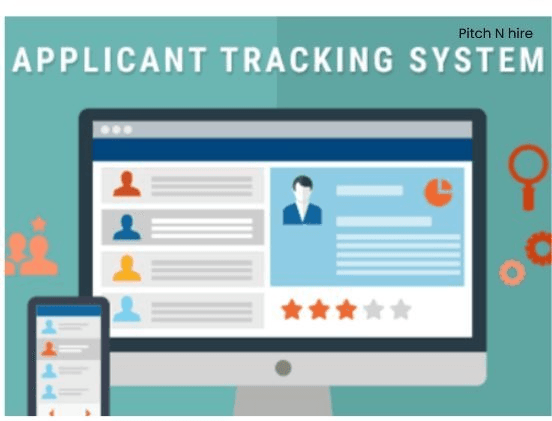
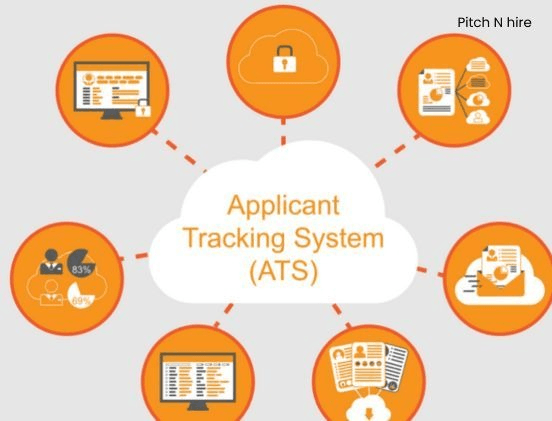
An applicant tracking system (ATS) is recruitment software that UK firms use to centralize collection, management, and evaluation of job applications. Knowledge of what ATS systems UK is a recruitment professional of the future needs.
Instead of doing CVs via emails and job boards manually, ATS software UK automates the evaluation and selection process, while ensuring that all UK based GDPR regulations are compiled to. This is a huge advantage, one that changes the speed of the hiring process, the fairness of the hiring process to candidates, and the level of protection for the organization against legal action.
Think of applicant tracking software UK systems as the central nervous system for your recruitment process. Everything goes through them: every application, every candidate touchpoint, every hiring decision is documented, tracked, and made available to your team in real:time. This central recruitment system UK makes the partitioning of manual recruitment systems much more efficient, transparent, and accountable.
When a candidate applies for a job, their application goes straight into your UK ATS. The system captures the CV and cover letter and all contextual info documenting how they learned of the job, their application timestamp, and their current status in your hiring workflow. Your team can also move candidates across the different stages : initial screening, interviews, assessments, references, and final decision : all in the same applicant tracking system UK.
Applicant tracking systems assist recruiters with:
• Tracking where candidates are on the hiring pipeline so they always know the candidate's status
• CVs are automatically scanned and shortlisted using smart algorithms so that candidates are aligned with the job requirements
• Collaborating with hiring managers, interviewers and other stakeholders without having to rely on a ton of email
• Having audit:ready recruitment records to prove the recruitment process was fair and to comply with various legal regulations

Automation is one of the best features of an ATS recruitment UK system. It allows you to post to lots of recruitment boards with a single click. It allows you to screen hundreds of CVs and find the best candidates. You can schedule interviews without a ton of emails that take hours. These are the basics of what ATS software UK can do.
Removing the repetitive tasks that no one likes is what the automation features are for. It is meant to help people focus on the important parts of recruiting: finding excellent candidates and making hiring decisions that require a human touch.
Modern recruitment systems in the UK do not work in isolation. Systems integrate with your business tools, from your calendars and emails, to your job boards and HR systems. This makes for a smooth experience where information automatically moves between different systems, and updated information is accessible for everyone: errors from manual data entry are minimized.
Would you like to see how it works? Look at our How ATS Software Works in Real Hiring Scenarios guide to learn more.

The complexity of hiring in the UK is increasing. To continue to be compliant with the regulations, recruiters are expected to move more quickly. The days of doing hiring with straightforward systems are gone.
Think about it: there is a reduced number of candidates available, and you have to be the first one to attract and drive them through your hiring process. At the same time, you have to be compliant with the regulations of the general data protection act, and keep a record of how you treated everyone fairly. You must do all of this without managing high numbers of applications from a variety of recruitment and job board systems.
This explains why recruitment solutions where ATS is used has become commonplace in startups, SMEs, and recruitment agencies. With manual processes, organizations have come to understand that they will never be able to achieve the speed, consistency, and compliance required for modern hiring. From small firms with 10 people to big companies with thousands of employees, ATS in recruitment has become a norm.
The rapid rise of UK recruiting software is not just a trend or temporary marketing gimmick. It is an actual business need. Companies using ATS systems UK find they can:
• More quickly review applications
• More consistently make hiring choices
• Decrease administrative workload on recruiting staff
• Improve compliance record keeping
• Improve candidate experience
• Overall make better hiring choices
To assess why direct systems in the UK are beneficial, it is important to understand the negative consequences of having no solution. A large number of businesses in the UK continue to hire manually. A job becomes available. Applications arrive at the email, job board, LinkedIn InMail messages, etc. Somebody, typically an already overworked recruiter, pulls down resumes, makes a spreadsheet to track the status of candidates, and attempts to communicate with hiring managers via email.
There are no shortage of serious issues faced by companies if they do not have an applicant tracking system in place:
• CV inundation from a multitude of job boards overwhelming staff. A single job posting can yield hundreds of applicants. Manually managing this is not practical. Recruiters are focused on downloading documents, sorting them, and organizing them instead of assessing candidates.
• Screening and interview scheduling delays. Automation is a huge workflow tool. Without automation, scheduling interviews is a big pain. Checking availability with candidates and interviewers and going back and forth via email invites is a huge waste of time.
• The inconsistent process of hiring. When hiring is manual and undocumented, different recruiters and managers have no standard. This leaves a lot of room for inconsistent and poor hiring decisions, which can lead to discrimination and legal issues.
• Groundless fears of data breach GDPR regulations. This is perhaps the most serious problem to consider. GDPR is all about candidate data, and how to protect it, in what circumstances to collect it, how to stay mindful of candidate data and how to maintain records to demonstrate compliance. Everything is a nightmare when processes are manual. Data is stored in multiple locations, records of candidate consent are lost or absent, and update descriptions are inaccessible.
Today's ATS systems have greatly improved in the UK, and closure of these difficulties is in automation, transparency, and stratified hiring processes. The benefits of an applicant tracking system in the UK can be noted in the expedited and simplified management of recruitment, as well as the advantages it offers to the entire organization.
Automation alleviates tedious work. Visibility keeps everyone posted on candidates' progress in each stage of the process. Structured workflows provide consistency: each candidate is treated the same, evaluated on the same standards, and processed the same way. This leads to quicker hiring, improved outcomes, and total compliance peace of mind.

The markets for ATS providers in the UK is vast. Each provider caters to a unique business size and hiring strategy. Some specialize in enterprise:scale hiring for big corporations that have complicated needs. Others are designed for evolving UK firms and recruitment agencies that require flexibility and budget:friendly solutions.
The ATS providers in the UK have a wide range of options to choose from, thanks to the competitive nature of the industry. For UK ATS providers, this means there are options available to fit everyone's budget and needs. It also means that the buyer needs to put in a lot of effort to find the most suitable solution.
Below is a summary of the most common ATS providers UK, evaluated according to:
• Features : What does the system do? Does it have AI screening? Does it do scheduling? Does it integrate with your systems?
• Usability : Is it intuitive for your team? Does it need training? Can users get productive in a short time?
• Compliance Does the system help with GDPR? Does it manage data securely? Can you prove compliance to auditors?
• Scalability : Does the system keep pace with your growth? Can you manage an increased volume of applications? Is it customizable to fit your changing needs?
This is not a ranked list : it is to help buyers assess possibilities before asking for demos or trials. We're not saying which is the "best" ATS system, because there is no universally "best" solution. The top ATS providers UK for your company will depend on your needs, the budget, and the requirements.
Pitch N Hire is made especially for UK SMBs and recruitment agencies. The platform is meant to prioritize and simplify the user experience. Employees typically report learning the platform in a matter of a few days. The platform includes AI CV scanning, compliance tools, and integrates with UK job boards. Pricing is accessible to SMBs.

Workable is popular with recruiters for all org sizes, but especially for mid:sized orgs. Workable features include candidate sourcing, interview scheduling, and workflow automation. Compliance is adequate, and AI screening can be improved. Workable is popular for its customer support and user interface.

Greenhouse is for larger companies facing high:volume hiring. Greenhouse offers sophisticated features, flexibility, and great reporting tools. Pricing is high, but so are the tools. Greenhouse is great for companies with specialized recruiting operations, and less so for smaller companies.

Zoho Recruit is designed for businesses that need to be more careful with how they spend money. Zoho Recruit is part of a bigger group of programs called Zoho. Out of all the applicant tracking system software UK competitors, Zoho is the best choice if you want to spend less, but keep in mind, the GDpR compliance is only partial, and there is no AI screening. This is best for small companies that need help with the hiring process.
There is a clear consistency in how applicant tracking system software UK charges businesses and how the tracking systems differ in price, service, and capability. Zoho Recruit is at the bottom of the totem poll costing only £50:200, while businesses like Pitch N Hire and Workable are mid:range costing £200:1000. Finally, Greenhouse is the top costing more than £5000.
For more information look at our comparison of how different ATS providers ATS systems differ.
Reading reviews for ATS Providers UK is important as they help answer the question of how these systems perform in the real world. Marketing materials and other non:reviewed:a:product or serviced docs only give you the how to of using a product or service, with no indication as to how well it will work. Reviews show you if the best systems UK actually work the way they said it would, and if there are broken things.
When it comes to the support, reviews will tell you if the support is actually responsive or if it will take a while.
Searching for reviews of ATS providers in the UK can help you know which solutions are worth the investment and which ones are liars.
While compiling reviews on ATS providers in UK, verified reviews mention the same criteria consistently.
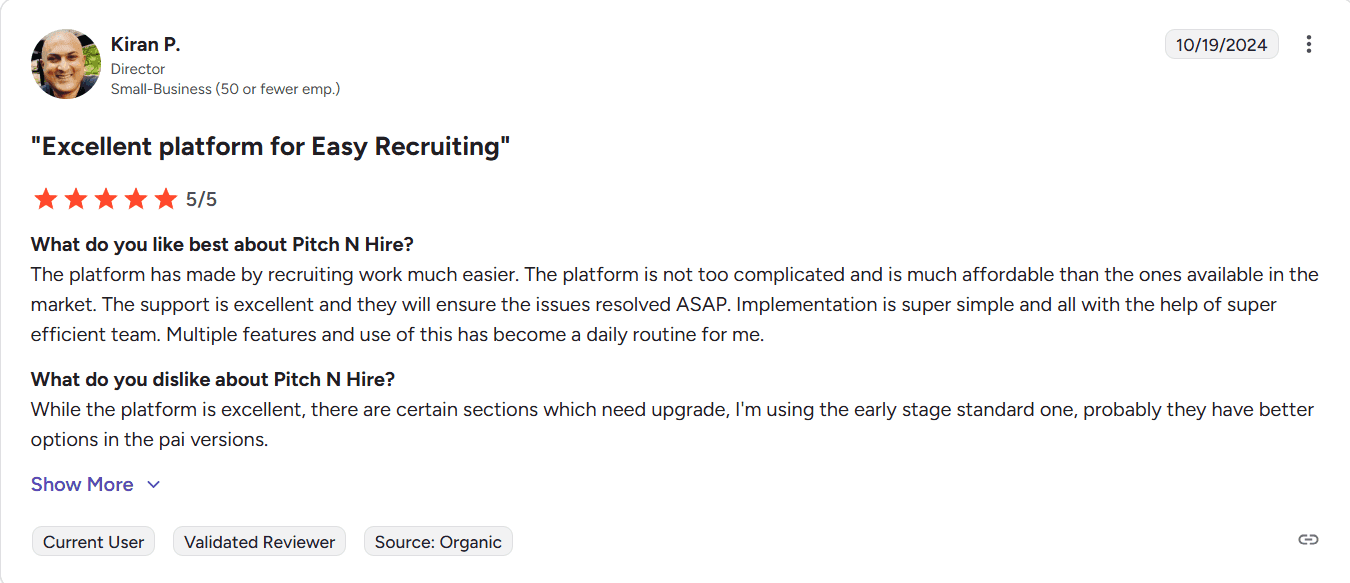
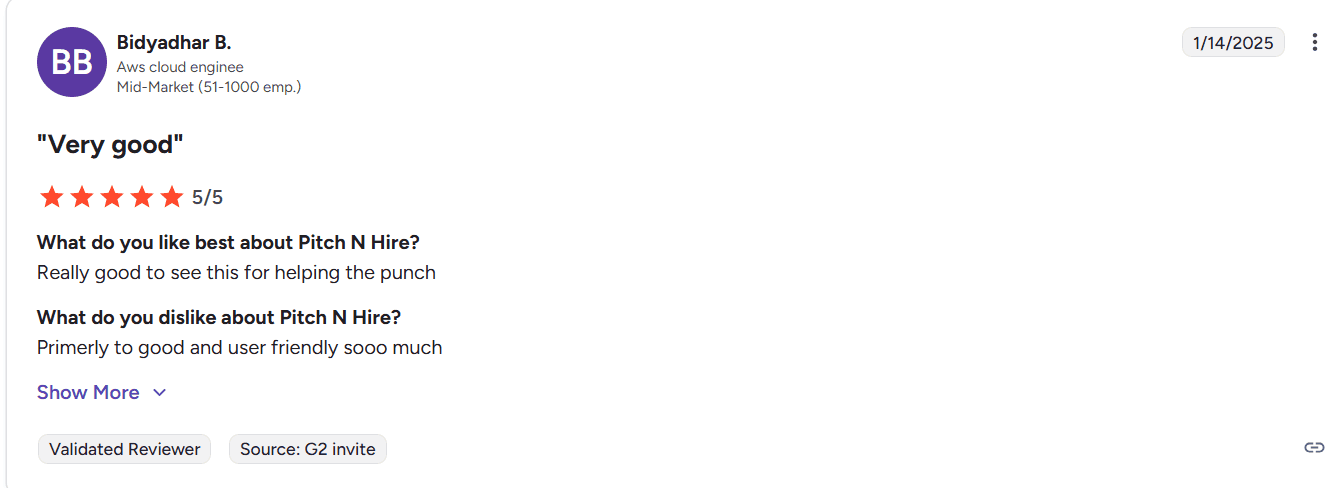
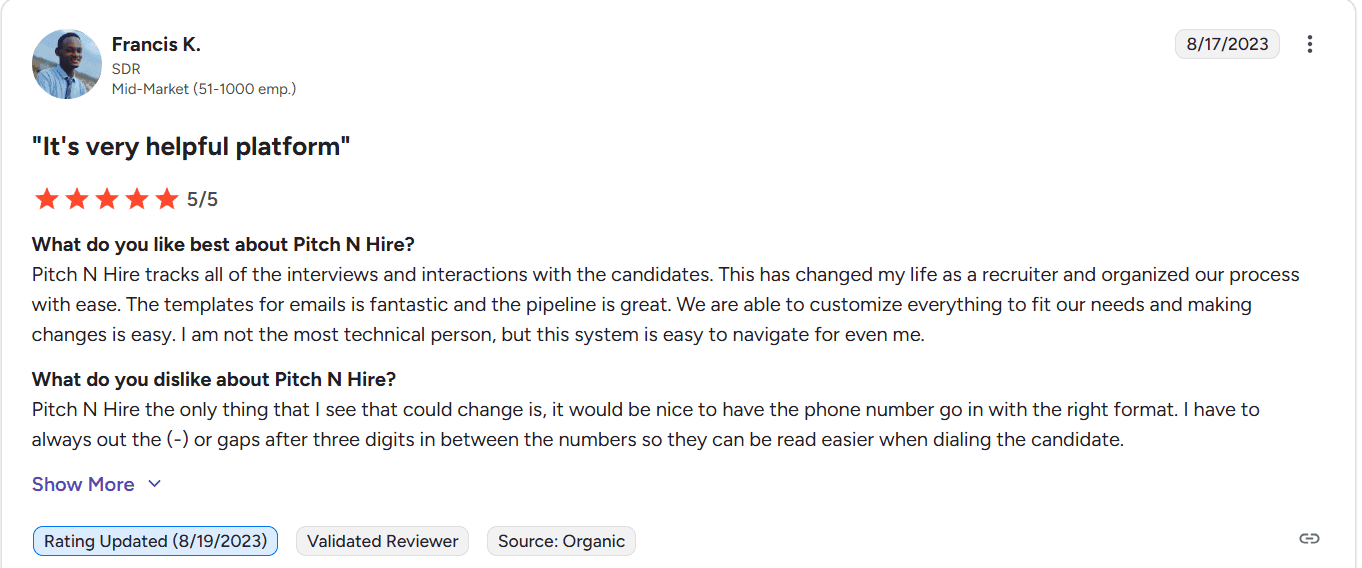
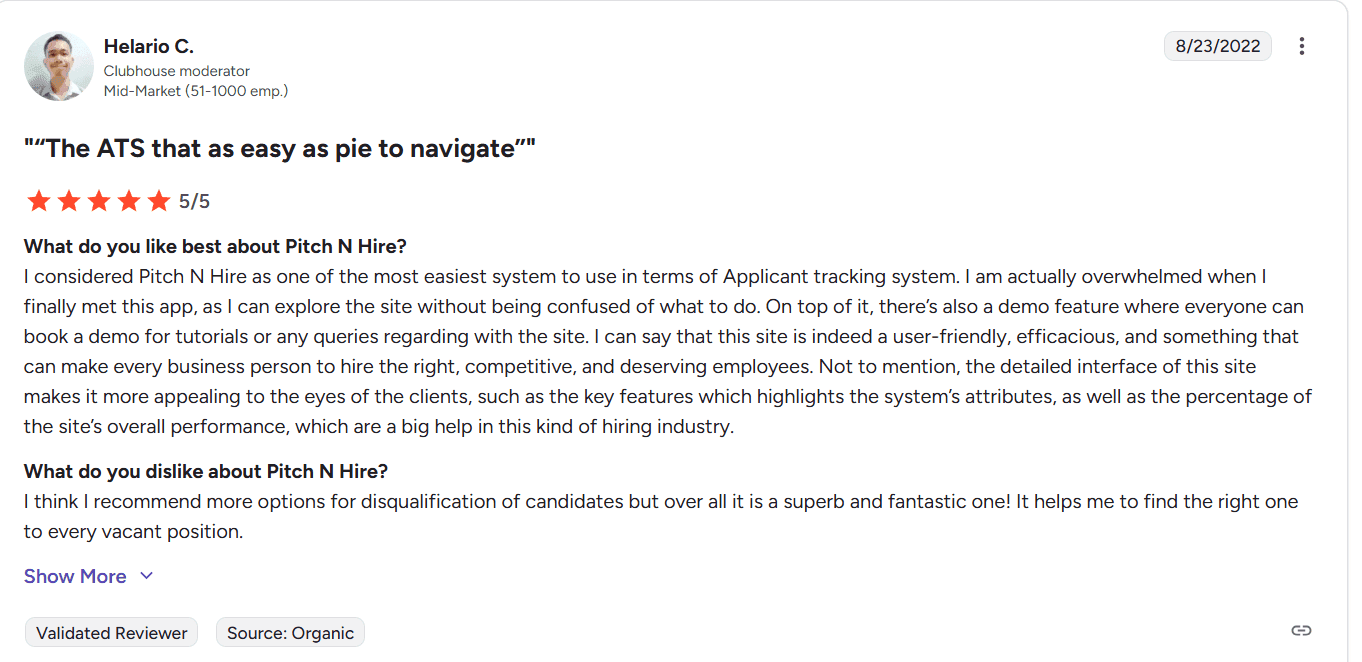
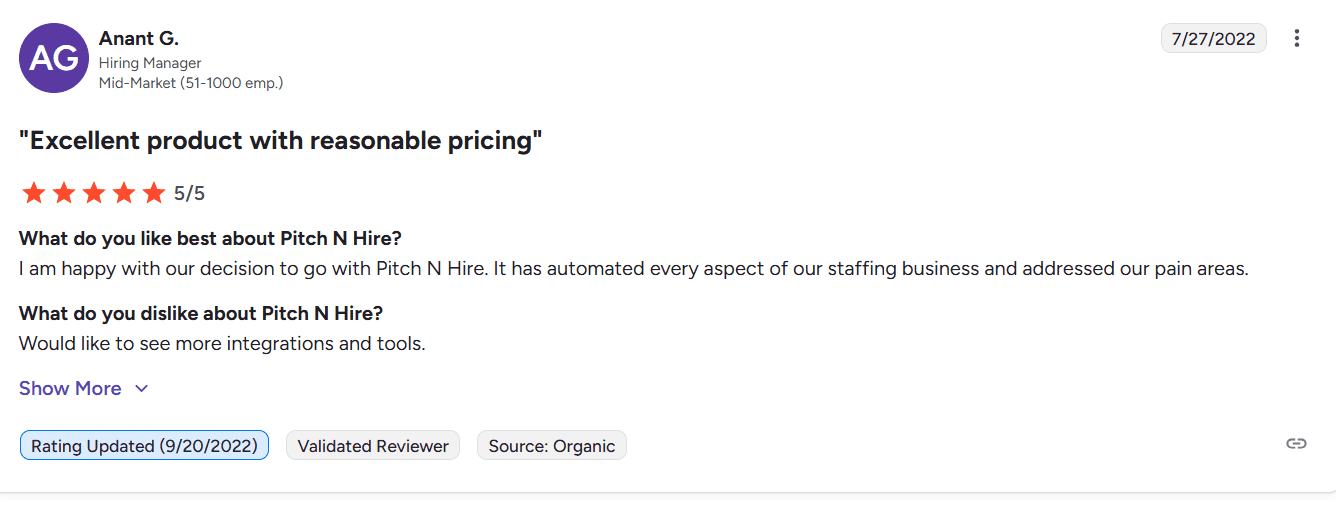
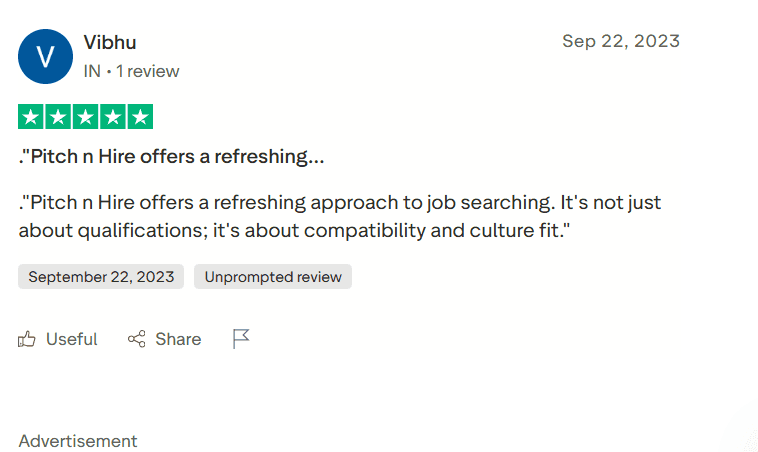
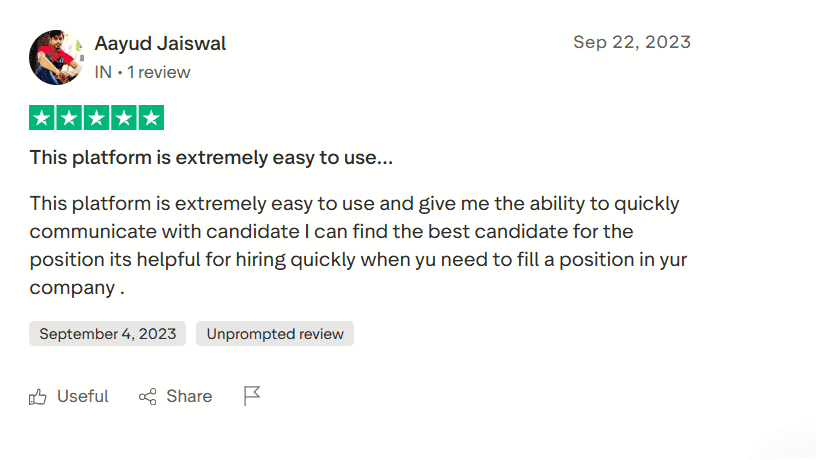
Reviews on ATS providers in the UK can be found on Capterra, G2, and Trustpilot. In addition to reviews, they contain information on the software.
In different reviews of the best ATS providers UK, a user is able to piece together what to expect from a particular service. It is better to distribute the reviews, as UK companies will most likely have to consolidate several pieces of feedback when dealing with ATS providers reviews in the UK.
A system might have strong reviews on one platform but less positive feedback on another. Look for patterns. If several reviews pointed out the same problem, then it's probably true. If a single reviewer pointed out something that other reviews didn't mention, that reviewer may have been overly subjective.
To gain perspective on how ATS systems UK work in real:life hiring scenarios, it can be useful to analyze a typical workflow in recruitment processes employed by most platforms today. For instance, the following UK applicant tracking system methodology illustrates a process framework that many UK systems seek to adhere to.
This methodology captures the essence of how hiring should be in a progressive organization: systematic, efficient, and comprehensive. Familiarity with this applicant tracking systems UK methodology will help in making informed selections.
The recruitment process starts with posting a job. Modern ATS systems don't just capture job postings into their databases. You create the job a first time your applicant tracking system, define the job's requirements, establish your screening criteria, and then distribute your posting to multiple job boards. You can distribute postings to Indeed, LinkedIn, Glassdoor, Reed, and many more job boards from your ATS system in the UK.
The benefits? You get to work less and reach more potential candidates. Everything happens once, and from then on, it's automatic. When you describe the job, it releases the description to all boards. When you close the job, it closes on all boards.
The application can come from various sources; your website, job boards, LinkedIn, the mail, even referral links, the ATS in the UK systems can capture them all. Instead of distributing these applications among various systems and inboxes, they will all be in the system. Each application will be organized, and in case a team member would need to access any application, the team member will be able to access it.
This centralization is more important than it might sound. When applications are scattered, things get lost. Someone applies through Indeed, but it gets ignored. Someone refers to a friend, but the CV is in some email and never gets seen. Someone applies through your site, but the hiring manager is never alerted. With a centralized ATS software UK, nothing gets lost. Every application gets captured and tracked.
Your ATS recruitment UK solution starts receiving applications, it is able to automatically screen CVs via smart algorithms. You determine what you are looking for. It could be skills, qualifications, years of experience, and buzzwords, and the system will check those against the CVs.
This is where the applicant tracking system software UK val AI screening begins. Instead of a recruiter reading hundreds of CVs, the system does the first screening, and candidates get ranked based on how well they match your requirements. The system will move candidates who strongly match your criteria to the next stage, flag candidates who match partially for a manual review, and automatically reject candidates who don't meet basic requirements.
When you start selecting candidates to interview, you start the scheduling process. Instead of sending hundreds of emails trying to find out who is free, your ATS software UK can schedule automatically. Candidates will be sent interview invitations and time slots. They pick the time that is best for them. The system will check to see if the interviewers are free and book the interview room. Everyone receives calendar invitations. The system automatically sends reminders for the interview the day before.
While you go through the hiring process, your UK ATS is gathering and storing information. What are the numbers of applications that you have received? What amount of time did candidates spend at each stage? Which candidates were successfully hired in the end? From which job board or referral source did your top hires come from?
This information is very important. You can find and follow trends to make your recruitment UK strategy better. You may find that candidates from one job board are almost always more likely to be hired. You may see that some interview processes take too long. You may see that some job postings attract a lot of people who are not a good fit. This would suggest that the job description needs to be revised.
Throughout this entire applicant tracking software UK process, your system is managing candidate data securely and in a compliant manner. Consent is obtained and documented. Data is kept safely, using the right access control measures. Information retention is done in compliance to the regulations and is deleted when required. Audit logs detail events and the users who accessed specific data.

In the initial stages of growth, many companies look for best free ATS providers in the UK, especially when money is tight. Getting recruitment software for free is quite enticing. For some businesses, that might be the case.
However, considering free ATS providers, the UK changes the landscape of expected services.
Free ATS software UK tools usually provide underwhelming services for candidate tracking, such as:
• Creating and storing job postings
• Having candidates apply through your website
• Organizing and storing candidate CVs
• Creating and noting lists of candidates
• Possibly, the sharing of access with a colleague
If a micro business is receiving a small number of applications per job, this best free ATS providers UK option should be enough. If you're a startup that only hires one new team member a month, going with only this option should be okay.
Best free ATS providers UK options often significantly miss the mark in many areas, such as:
• Advanced screening : The majority of free tools avoid providing you AI screening. You'll have to look at every CV yourself.
• Controls for compliance with UK GDPR : Free tools don't always have the compliance requirements that allow you to process candidate data in a secure and legal manner.
• Integrations with job boards : You cannot share postings across various job boards. You will have to share each one individually and will have to juggle different versions of your job postings.
• Analytics and Reporting : Typically, free tools don't have analytical features, which explain your recruitment process and how to improve it.
• Scalability : Free tools often cap the number of users, the jobs you can post, or the candidates you can track.
For companies that hire on a regular basis, paid UK ATS solutions generally provide a better long term value for the following reasons:
Cost savings for the business are justified. If a recruiter spends five (5) hours every week doing scheduling, CV organization, and data entry, that is costing the business money. If an ATS system saves even one or two (1 or 2) hours of that, it is already paying for itself within the first month.
Another significant factor is compliance confidence. The fines for GDPR breaches are costly. Implementing a tracking system offers peace of mind.
Making better hiring choices is going to make everything better. Using an ATS to help keep your recruiting process consistent, and using data to aid your decisions, means you hire better.
Check out ATS systems designed for developing UK companies. You will probably be astonished at how cheap high quality software in the UK is.
When UK ATS Providers London is where the hiring businesses are, they face the most challenges of all of the UK regions. London is the most challenging hiring market in the UK. Application volume is higher. Quality expectations are higher. Salary expectations are higher. Hiring velocity is higher.
These factors contribute to specific challenges for ATS systems UK used in London. You need a system that can tackle volume. You need a system that helps you keep quality and speed. You need a London solution from the best UK provider that understands the London market.
When London companies look for best UK ATS providers London, they tend to look for a few important things:
• Local customer service: Since the London business is in your own time zone and therefore is able to give faster and better responses, you don't have to wait for support to respond to your queries via email in a different country. Because of this, you are able to work at your own pace. Your London business is able to give you better results in regard to UK ats providers London. Other London businesses have their customer service representatives based in London to provide support during the working hours for the United Kingdom.
• Understanding of UK laws: Because of complex compliance in the United Kingdom, London companies are mostly working with international clients. Because of this, London businesses require UK ATS providers to have extensive knowledge of the laws and regulations that are in regards to employment.
• Understanding of the UK labor market: The job market of London is different from the rest of the United Kingdom or Europe. The country has a lot of companies that provide services in practice, finance, and technology.
Most London based UK providers operate on a country wide scale while offering expertise on hiring issues specific to the capital. These providers know:
• Which sectors of the economy are most significant to London
• How much London job seekers expect to be paid
• How much competition there is for talent
• What the laws are regarding the multinationals in London
• How fast the capital is growing and the level of hiring activity
If hiring is to be done in London, it is probably useful to engage UK ATS providers London who have a good understanding of the market and a strong local presence.
An ATS in the UK refers to Applicant Tracking System. As the name implies, it is a recruitment software to help employers run recruitment campaigns, keep track of candidates in various stages of the recruitment process, and keep recruitment records for compliance. UK applicant tracking systems also address the requirements of GDPR, allow job board integrations, and provide routing and other features to support a structured recruitment process. In a nutshell, it is the 'central nervous system' of recruitment.
The best ATS software UK businesses choose is UK company size, hiring volume, and compliance needs. Some sotware UK applicant tracking systems are for startups and small businesses. Others are for recruitment agencies, or enterprise hiring. UK businesses most often look for ATS software for ease of use, compliance to GDPR, automation, and price. Instead of looking for one best solution, look for best ATS software UK for your circumstance.
Applicant tracking systems are not legally required in the UK. However, many companies use ATS recruitment UK to minimize work and remain within the bounds of the GDPR and UK data protection laws. For companies that receive a large volume of applications, applicant tracking systems are needed, even when it is not legally required.
Tracking system compliance UK offers various features, including:
• Validated consent:Tracking the applicant's compliance with the data processing policy.
• Protected data storage:Data protection of applicants is provided through encryption and access control.
• Restricted access:Data protection of applicants is provided by a team of relevant members.
• Data removal:Data protection of candidates is implemented through deletion of data from the retention system.
All of the above features help a company achieve the necessary compliance with the GPDR while handling candidates and preparing for an audit.
The best free ATS providers UK usually offer basic tracking of candidates and may be missing key components such as Artificial Intelligence (AI) powered screening, integrations of job boards, and analytics. GDRP (General Data Protection Regulation) and ATS (Applicant Tracking System) paid software provide more advanced processes, control and reliability for developing automation growing businesses.
In the UK, ATS system lists should be assessed based on the following:
• Size of business:Is this system made for your organization's size?
• Recruitment workflow:Does your hiring process detail support it?
• UK job boards:Does it integrate with the boards you use?
• Compliance:Does it keep you secure on the right side of the law?
• Pricing:Is it clear what you're paying for?
All these factors help narrow down the list of UK ATS providers before obtaining demos.
Yes, ATS UK providers support recruitment agencies, which include:
• Multiple client pipelines:Managing candidates for more than one client in a single system
• Increased candidate volume:Tracking and processing large quantities of candidates.
• Collaborative hiring workflows:Collaboration between agency employees and client hiring managers.
Recruitment agencies often seek UK ATS systems with features for automation and reporting.
Several London:based ATS providers UK teams work with offer localized support and familiarity with the London hiring landscape. While some London:based ATS providers UK operate regionally, companies looking for London:based ATS providers UK most often prioritize compliance and support turnaround time.
Working with London:based ATS providers UK offers several benefits, such as improved support response time, familiarity with local market conditions, and the possibility of face:to:face meetings if necessary.
The most trustworthy ATS providers UK reviews can be found in software review sites that offer some kind of verification, such as Capterra, G2, and Trustpilot. Business software review sites also contain ATS providers UK reviews. Typically, ATS providers UK reviews and top ATS providers UK reviews focus on the software's usability, the responsiveness (and helpfulness) of the customer support, how reliable the software's features are, and how it improves (or fails to improve) the hiring process. Checking reviews in several different sites ATS providers UK reviews.
Absolutely. ATS solutions are tailored to small businesses. With the ATS software UK small businesses can enjoy cost:effective, easy to implement, and scalable hiring solutions. Small teams ATS software small businesses UK give a lot of value in terms of organization and reducing manual tasks and even speeding up the hiring process while ensuring that they remain compliant.
The best ai applicant tracking system UK is determined by timeliness and effectiveness of candidates screening, job matching, and process automation, all while being compliant with GDPR. Many ATS UK offer AI as a means to improve hiring for growing teams by eliminating manual screening, ranking candidates, and enhancing overall hiring efficiency.
There are a number of recruitment software UK that incorporate features of GDPR compliance. Aspects of these solutions can include data access control based on role, consent policies, and retention and audit data controls. Companies considering these recruitment software UK should assess data handling and compliance documentation before using these solutions.
It's easy to find customizable recruitment workflow software in the UK. For example, Modern Applicant Tracking System (ATS) software UK offers customizable hiring stages, approvals, and automation rules. Most ATS software UK recruitment workflow customization, making them a good choice for both SMEs and recruitment agencies.
It all depends on what your hiring volume, compliance requirements, and recruitment objectives are. There is no single best ATS System. There are only best systems for your unique situation.
• Knowing your hiring needs. Be ready to answer how many people are involved in the hiring process? What is your budget? What features do you want?
• Reviewing the options. Read ATS UK reviews, then compare software features and pricing.
• Goal testing. Most companies offer free trials. Use this to test the software with your people.
• Decision Making. Pick the ATS recruitment UK software that meets your needs and budget the best.
• Implementing Properly: It's only as smart as you make it. Spend time setting it up to your workflows, training your staff, and building the right habits.
• Most UK companies today must use ATS systems to handle recruitment in a way that is effective and fully legal.
• With ATS systems UK hiring software, you can save time, make better decisions, and stay compliant with GDPR.
• UK ATS systems are best suited to your company's needs, volume, budget, and other such factors.
• Free ATS providers UK may address the needs of very small hiring efforts, while paid options are usually better in the long run.
• UK ATS providers reviews and demos are great for gathering information. Use them wisely.
• You must ensure that the ATS providers UK you select is compliant with GDPR and that the data handling methods are up to par.
• Evaluate ATS providers UK in detail, and review processes and workflows. Consult ATS specialists prior to making your choices.
• Book your Free ATS Demo with the best UK applicant tracking systems to understand how their systems work.
• Understand the varying options in ATS Providers UK by comparing them.
Choosing the right ATS software UK is a decision that deserves ample time and consideration. It will pay off in the long run.
Contact: info@pitchnhire.com | https://pitchnhire.com/contact-us
Applicant Tracking System for Recruiters
Best Applicant Tracking System 2026 | Top ATS Software Compared
Best Applicant Tracking System 2026 USA | Top ATS Software
Best Applicant Tracking System 2026 UK | Top ATS Platforms
Best Applicant Tracking System 2026 Canada| Top ATS Software
Best Applicant Tracking System India 2026
Best Applicant Tracking System Online 2026 | Top 10 ATS
ATS Recruitment Software Comparison | Best ATS Comparison
Best ATS for Small Business Software
Best Applicant Tracking System 2026 Australia | Top ATS Software
ATS for High Volume Hiring 2026
ATS Tracking Systems UAE 2026 | Applicant Tracking Software
best applicant tracking system for small business
applicant tracking system for small business
healthcare recruitment software
staff scheduling software healthcare
healthcare employee scheduling software
Manufacturing Applicant Tracking System: Top 10 Recruitment Software
Top 10 ATS for Logistics Companies | Best Applicant Tracking Systems for Hiring
Hospitality Applicant Tracking System | Top 10 Restaurant Hiring Software
AI-Powered Applicant Tracking Systems
Inside the page
About The Author
INTRODUCTION
WHAT IS AN APPLICANT TRACKING SYSTEM (ATS) IN THE UK?
WHY UK COMPANIES NEED RECRUITMENT SYSTEMS/ATS INTEGRATION
ATS PROVIDERS IN THE UK, 2026
User Feedback and ATS Providers UK
THE PRACTICAL UK HIRING Pitch N Hire METHODOLOGY: HOW MODERN ATS SYSTEMS WORK
BEST FREE ATS PROVIDERS UK: WHAT TO EXPECT
TOP ATS SERVICE PROVIDERS IN LONDON, UK
ATS SYSTEMS IN THE UK: FREQUENTLY ASKED QUESTIONS
CONCLUSION: ARE YOU READY TO CHOOSE YOUR ATS SOFTWARE IN THE UK?
Get noticed by recruiters and increase your shortlist chances.
Profile Boost
One-Click Apply
Higher Shortlist Rate
Unlimited Interview Practice
Resume Checker
Go Pro. Get Noticed.
›Job Posted
Unlock candidates for just ₹1, run targeted email outreach, and post unlimited jobs — without upfront platform fees.
Profile Boost
One-Click Apply
Higher Shortlist Rate
Start Posting Jobs →
›www.palify.io
›
Build your profile, showcase your work, unlock opportunities, and earn through meaningful engagements.
Create your profile today
›